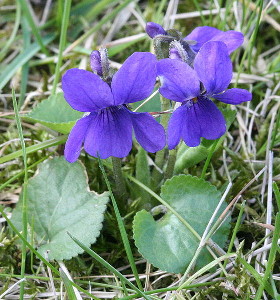
 The sweet violet has long held a quiet yet profound place in the botanical and historical identity of Toowoomba. While the city is widely celebrated today for its grand public parks and the massive spring festival of flowers, its true floral soul is tied to an unassuming European wildflower known botanically as Viola odorata. Far beyond a simple garden plant, the sweet violet became inextricably linked to the memory, grief, and resilience of the local community through an extraordinary wartime effort that shaped the city's civic heritage.
Originating across Europe and parts of western Asia, the sweet violet was brought to the Darling Downs by nineteenth-century settlers seeking familiar reminders of their homelands. The high altitude of the Great Dividing Range provided an ideal environment for the plant. Sitting roughly seven hundred meters above sea level, Toowoomba experiences a cool, temperate microclimate featuring frosty winter mornings and gentle spring transitions that closely mirror European conditions. The sweet violet found a welcoming home in the rich volcanic soils and shaded gullies of the region. Spreading naturally via underground runners, the low-growing perennial soon naturalized across the landscape, carpeting suburban footpaths and damp lawns in shades of deep purple every winter and spring.
The transformation of the sweet violet from a common garden escape into a revered symbol of remembrance is rooted in the immense sorrow of the First World War. As local young men departed the Darling Downs for distant battlefields, families endured the heavy weight of conflict. When the war finally ended, the community faced the devastating reality of a lost generation. Mothers and female relatives of fallen soldiers sought a tangible way to honor their sacrifice and established a plan to build a major monument. To raise the necessary funds, these women turned to the natural abundance growing right in their own backyards.
Grieving mothers, grandmothers, and sisters across the city meticulously harvested wild-growing sweet violets from local gardens and shaded creek banks. They tied the blooms into precise posies, each standard bunch containing exactly fifty fragrant purple flowers and three protective green leaves, bound securely with simple cotton thread. These delicate bunches were sold for three-pence each at local race meetings, street corners, and fundraising events. It quickly became a poignant and fashionable gesture for women to wear a posy of Toowoomba violets pinned to their lapels as a sign of mourning and solidarity.
Through this grassroots fundraising effort, the community raised an astonishing eighteen hundred pounds, a massive sum for the era that directly funded the construction of the Mothers Memorial. Unveiled by the Queensland Governor in 1922, the monument remains a rare and significant war memorial commissioned entirely by women to honor their sons. To this day, the site serves as the focal point for the city annual ANZAC Day commemorations, maintaining an unbroken tradition of remembrance that began over a century ago.
Recognizing the deep emotional resonance the flower held for the local populace, the Toowoomba City Council officially declared the sweet violet as the municipal floral emblem in January 1932. This formal declaration cemented the plant's status as a core component of the town identity, earning it the enduring local nickname of the Toowoomba Violet. The cultural footprint of the flower expanded further into official civic heraldry when Toowoomba adopted its official Coat of Arms in 1960, featuring a violet alongside a sprig of golden wattle tied with a red ribbon to represent both natural beauty and historical sacrifice.
Botanically, Viola odorata possesses distinct traits that separate it from native Australian violet species. The plant features heart-shaped leaves forming a tight basal rosette close to the ground, while its flowers display deep shades of violet, purple, or lilac with a characteristic nectar spur. Its defining quality remains its intense, sweet fragrance, which historically made it a favorite for natural perfumery and traditional herbal remedies. Herbalists valued the leaves and flowers for their soothing properties, brewing them into teas to alleviate respiratory discomfort, while culinary traditions incorporated the edible petals into salads and crystallized cake decorations.
As Toowoomba has evolved into a bustling regional inland city, efforts to preserve this historical connection remain active. While urban development and changing landscaping trends have altered many residential blocks, local heritage groups and botanical enthusiasts continue to champion the plant. The visitor information centre stocks violet-themed memorabilia, and specimens can still be discovered blooming quietly in older established gardens beneath the shade of ancient trees. The sweet violet remains a powerful metaphor for Toowoomba itself, mirroring the resilient, unpretentious spirit of the families who built a community on the range.